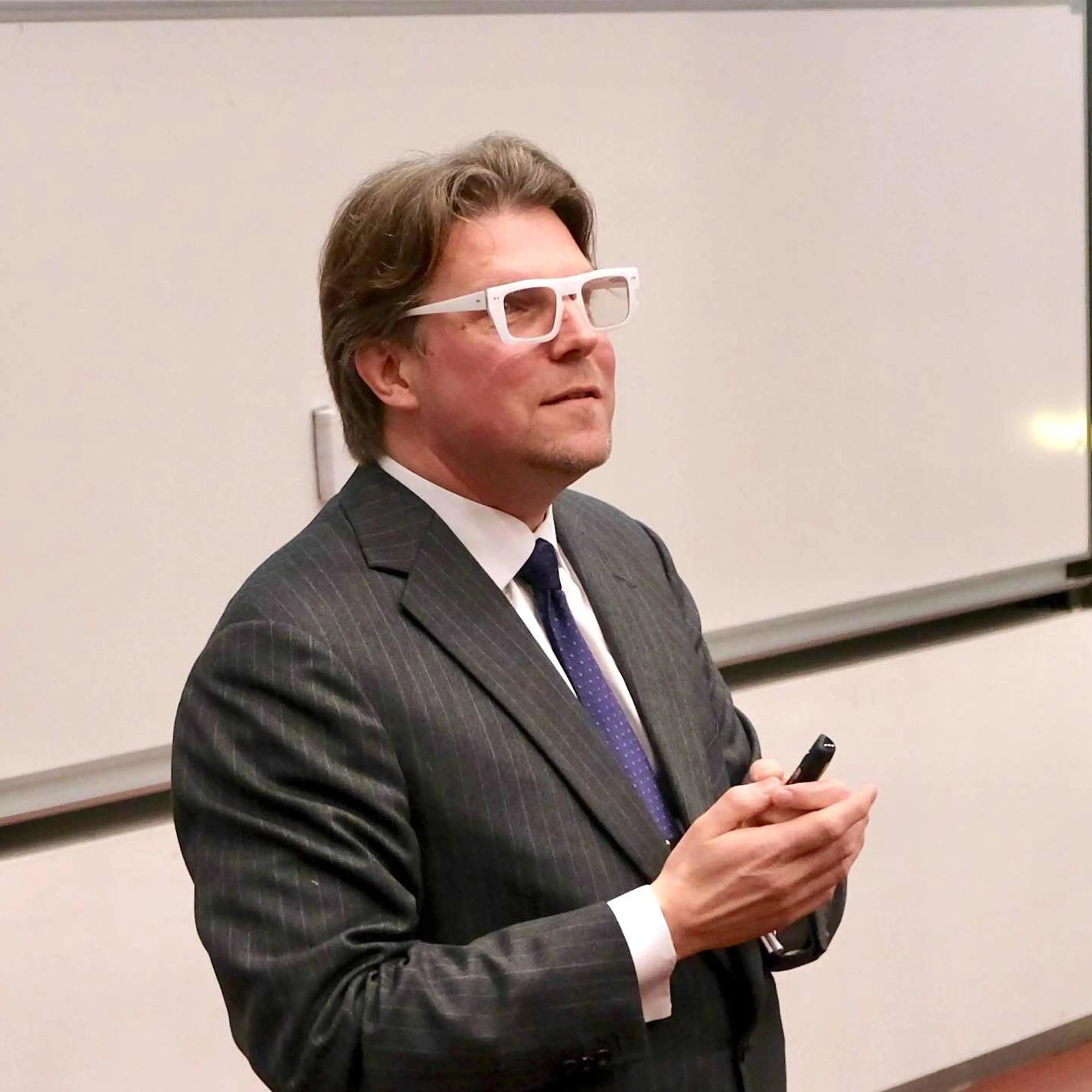
What Does the Research Say?Research on co‑leadership is a growing field. Tobias Berggren Jensen holds a PhD in co‑leadership and is the author of the book “Less Hierarchy, More Leadership - Paths to the Self‑Leading Organisation.” He teaches at the course "Co‑leadership" at CBS Executive Education, and here he shares his perspective on the insights from Clever - and what the research tells us about them.
“Research has also examined whether co‑leadership is for everyone. Not through empirically grounded studies in organisations as radically self‑leading as Clever, for example. But there are theoretically based assumptions and a few studies. My discussions with co‑led organisations have shown that in some cases, it may actually be the leaders who struggle the most to unlearn traditional managerial behaviour and who therefore leave the organisation,” he explains.
One study indicates that self‑leading organisations tend to be better suited for top performers, while others are more likely to leave the organisation.
“But there is a need for more substantial research. Because when you introduce new leadership concepts, we know from change‑management research that there will always be some who don’t come along. In co‑leadership, it can be beneficial to allow space for the fact that not everyone needs to take on an organisational role. This opens the door for different employee profiles within co‑led teams, where not everyone must have the skills or ambition to work with recruitment, finance or people management. But if it turns out that certain employees drop out during the transition to co‑leadership, we need to take that perspective seriously and understand what it reflects. At the same time, it’s difficult to find any system that works for everyone. Hierarchy doesn’t either.”
The difficult conversation is an area that requires further research, because it becomes even more important in co‑leadership — both within teams and between teams and circles. When more people are part of leading and setting direction, clarity is essential. And if conflicts and friction aren’t brought to the surface, clarity and shared direction disappear, says Tobias Berggren Jensen:
“Difficult conversations can be constructive if handled well, but they can also be destructive and undermine collaboration if they aren’t. Some co‑led organisations emphasise allowing someone to raise an objection if they cannot accept a decision — in which case the decision isn’t made. But there can be a tendency for this to happen rarely. Because do people dare to challenge the team and bring that diversity of perspectives that helps push and develop one another? It’s interesting to explore how you create space for that.”