For the benefit of patients, the healthcare sector, and the environmentTo build a more sustainable future, twenty partners from the manufacturing industry, research institutions, and the recycling sectors have come together in the project, ‘Digital Health in the Circular Economy (DiCE)’, which are striving to find ways to re-use, refurbish and recycle different sorts of digital health devices.
CBS is represented by Christiane Lehrer and Attila Márton from the Department of Digitalization as well as Andreas Wieland from the Department of Operations Management.
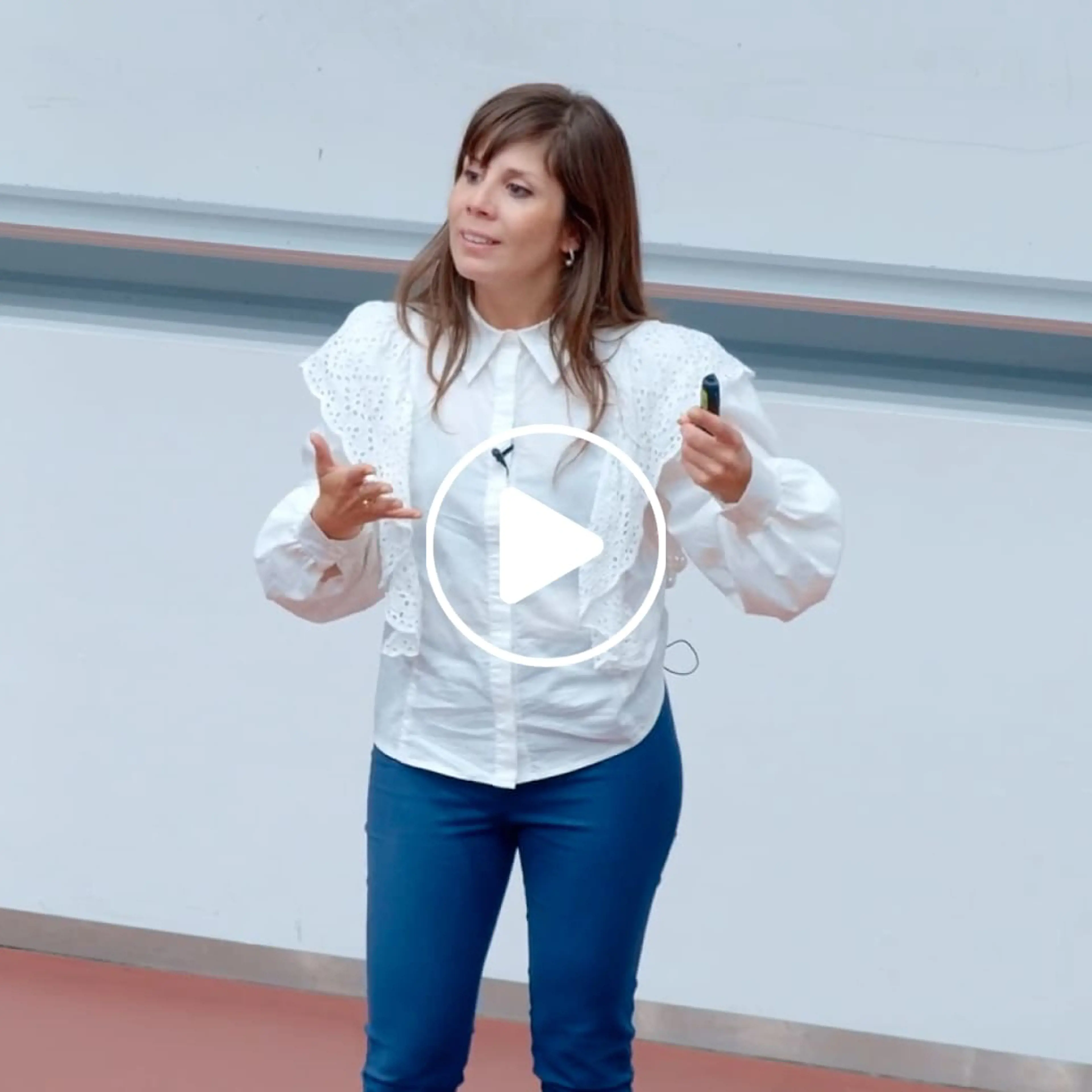
“It is a project that can really have a positive impact in the world – for the benefit of patients, the healthcare sector, and the environment. To me personally, it feels great to contribute academic knowledge and have it applied in the industry and society,” says Christiane Lehrer.
She is exploring how consumers can get in the loop of recycling the devices. How they can become motivated to return the wearable sensors and other smart technology devices once they do not need them anymore.
Christiane Lehrer explains: In home care settings, wearable devices like biosensor patches and On Body Drug Delivery Systems (OBDS) show how digital health technology can become more sustainable. These small devices are worn on the skin-biosensor patches and track things like heart rate, temperature, or movement, while OBDS devices deliver medication directly under the skin over time.
"Today, such devices are often made for single use and then thrown away. However, the DiCE project aims to show that with proper take-back schemes, patients could return used devices to the manufacturer for safe processing and reuse instead of disposal, ending up as electronic waste," says Christiane Lehrer.
A similar shift is possible in hospitals, where certain types of single-use surgical instruments or devices like ECG lead sets can be successfully reprocessed and used again, achieving significant savings in both costs and carbon emissions.
"Together, these examples show that reuse and refurbishment are not just ambitious ideas, but realistic strategies that can deliver measurable environmental, economic, and clinical benefits," concludes Christiane Lehrer.